Showing posts with label essays. Show all posts

Wednesday, 27 April 2016

How to stay healthy during exam season

Healthy living as a student is tough at the best of times. When I was an undergraduate, my main form of exercise was dancing on nights out and I considered chocolate and instant noodles key food groups. This last year I have been trying to live healthier (partly because I study Global Health - learning about health makes it easier to live healthier). I joined the gym and started cooking healthier food.

However, staying healthy during the exam period? Forget about it. When I'm stuck at home or the library all day and stressed out by coursework deadlines, making sure I'm getting my five a day and spending time cooking is so low down on my list.

In an effort to figure out how to live healthier during exams, I asked some fellow postgraduate students for their top tips for staying healthy during exam season. Hopefully this list helps other people who face the same struggle as me!

1. Stay hydrated! 


It's so easy to forget or neglect to bring a water bottle to the library with you, especially when you are carrying your own weight in books and a laptop, but if I don't bring any water with me then I won't be able to work for long before I end up with a headache.

2. Buy carrots.  


This one really surprised me but it does make sense. Carrots are one of those healthy foods that you can eat raw and a friend of mine really rates them as a great stress food because you can reach for them when you would normally reach for a chocolate bar.

Okay…so maybe they aren't as satisfying in terms of sugar, but they fulfil that desire to just eat something which seems to affect all of us when we are stressed out. Fruit works too but one advantage of carrots is that they don't get bruised in your bag and they have a longer sell by date which means you are less likely to have to throw them out because they've gone off.


The ultimate comfort food – must resist!


3. Do the weekly shop online.  


The logic for this is absolutely brilliant. Firstly, walking round a supermarket is a total time eater; I know when I go shopping even when I have a list it ends up taking me at least an hour, plus getting there and back during exams and coursework. I just don't have that time spare. Doing the shop online is much more time efficient which can totally help stress as well.

However, the main way it helps you stay healthy is that supermarkets are very good at marketing junk food to customers. As soon as you walk in you see muffins or cookies on offer, and then you walk around and see more goodies on sale. By shopping online, they can't tempt you with sweet and sugary food and instead you can just buy what you actually need. Plus, you can almost always arrange a delivery time that suits you perfectly.

4. Don't forget your friends. 


Revision and working on coursework can be quite isolating, and often you feel it's something you can only do on your own. However, study groups can be an amazingly helpful way to learn and by staying social and getting you out of the house. Even just meeting up to chill out is a good idea – there can be a life outside of exams!


Celebrating the end of teaching with the public health lot. 


Remember that health is not just exercising and eating right. During these intense study periods levels of stress are higher and we have a tendency to stop looking after ourselves in favour of just getting work done. However, this doesn't necessarily work, as the less healthy you are the less productive you are.

I will definitely be trying these four tips for staying healthy, and hopefully these ideas inspire you to find your own ways of staying healthy to ensure the most successful exam season possible.

Emma

Monday, 21 March 2016

Productivity and the Easter break

The Easter break is the perfect mid-semester break to recharge your batteries and maybe get some work done. A whole month off of my usual timetable is nothing to complain about, and I’ve already gone home to Norway for some much needed time relaxing with my family.

However, since the Easter holiday here in Norway is only until Tuesday next week and most of my friends here have their exams, I’m not going to stay for the whole month. The plan is to get some serious work done in April when I’m back in Southampton, so fingers crossed I will actually follow through.

In the meantime, while most Norwegians have retreated from the cities and up to the mountains, I’m here in sunny Oslo enjoying some gorgeous sunsets


I was lucky enough to get to spend a couple of hours with my best friend before she went back to university in USA!


Now I’m here wondering how I should spend the two next weeks. The thought of not doing any university work is tempting, but not so likely. It’s a strange feeling going into Easter break after such an intense work-period before Easter and now there’s suddenly a month until my next deadline. What’s the best way to keep the motivation up for this month?

Without claiming that I know the best answer to this, I think the best way is to have a proper week off without any work. Did someone say binge-watching Netflix? Yes! The best part about that is, that even with a proper week off there are still three weeks left of the break, which means you can spread the workload.

A good start is to make a plan on what you want to have finished over Easter and what coursework you want to have started. If you make a realistic plan imagine how nice it will be after Easter when you are ahead on the deadlines. To me, the thought of being ahead for the next term is motivation enough to work over Easter.

How to get there is up to you. It could mean working a little bit every day or simply putting aside two or three days per week just for work. It’s also a question of defining work. ‘Work’ could mean catching up on the reading you should have done, starting that essay or coursework or simply just taking notes from the lectures you missed before Easter. Either way, without sounding like your mum – not doing any work over Easter is bad idea no matter how you put it.

Make a plan, but also remember to enjoy the holiday.

Other than that, I hope you have a productive and, most importantly, relaxing and refreshing break!

Alexandra

Tuesday, 26 January 2016

Preparing for your dissertation

It’s that time of year – exams are finished and semester two begins, bringing along with it the dreaded dissertation. I was fortunate enough during my undergraduate degree to have been an intern within ECS (Electronics and Computer Science) after my second year, where I began a research project that became my dissertation completely by accident.

However, keeping momentum on any project is tough. This time last year, despite having started technically some months ago, I was still fairly unsure of what I was actually supposed to be doing. I’ve jotted down a few key pieces of advice for those of you embarking on your dissertation marathon. Take it with a pinch of salt; it worked for me, but ultimately this is your project and you know how you work best.

1. Read


Read everything about your topic that you can get your hands on. If you aren’t sure what your specific research question is yet, read an array of literature and write down questions that arise as you go - maybe one of them will be interesting enough to become your project. Once you have your research question, don’t jump into the literature review straight away. keep reading and learn as much as you can. Then when you sit down to actually write something, it will be much, much easier.

2. Talk to your supervisor


Supervisors are your best resource for advice and guidance. Arrange meetings with them and make sure to attend prepared, make a list of the questions you want to ask so that you don’t waste your time. Some departments have a limit on how frequently you can meet with your supervisor, so make sure you check your department’s rules and regulations.

3. Plan your time


Discuss a timeline with your supervisor, set reasonable deadlines for each stage of the work and try to meet them. Setting deadlines helps to avoid things being left to the last minute, and by involving your supervisor it becomes harder to miss the deadline.

4. Don’t let it take over your life


Remember that you have other modules and coursework to do, don’t let the dissertation become the only thing that you work on. Third year is a crucial time and you don’t want to ensure success in the dissertation at the expense of your other modules.

5. Talk about your ideas


Get together with friends and coursemates and talk about your ideas for your topic. Talking to someone else can really help clarify your ideas; it doesn’t matter whether or not they actually know what you are going on about. It’s like the ‘programming teddy bear’; the idea that, when you are programming, talking to a teddy bear on your desk explaining your code helps you to avoid mistakes and helps you understand what you are trying to do. The exact same thing is true with your dissertation. Find your teddy bear!


My teddy bear is actually an owl – poor thing has listened to me talk about my work far too often


The final piece of advice isn’t really so much advice as it is a cliché. Don’t leave it to the last minute. As with most things, the way to ensure a really strong dissertation is to give yourself plenty of time to write and re-write. It’s an organic process where things improve the longer you give yourself to understand what it is you are trying to do.


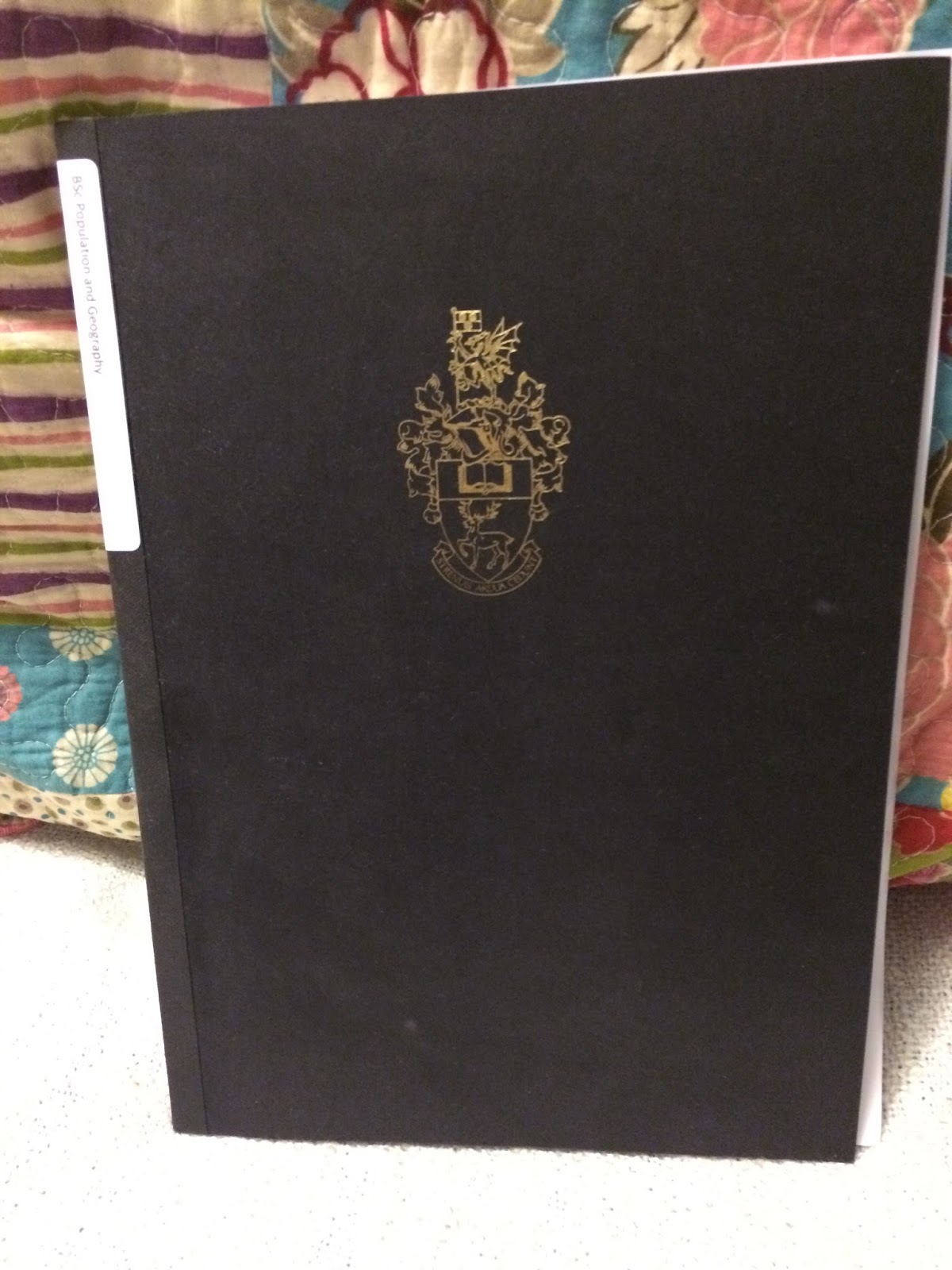
The final thing! Sending it to be bound is only slightly less terrifying than actually handing it in.


Good luck!

Emma

Thursday, 7 January 2016

Avoiding the January blues

The finest anti-climax of them all is finally here, and it’s called January. Every year excitement levels seem to reach fever-pitch around Christmas, and then promptly drop off into nowhere the second the New Year starts. January has never been a kind month, and what with exam and essay season now very much in full swing, it can be a little hard to manage sometimes.

Fear not however, for out of the ashes of 2015 comes a fresh start and a new attitude. No longer does January have to be written off as a cavalcade of awful. There are plenty of ways to keep things cheery, and here’s just a few of them (the rest I’m sure will be made available upon request - just as soon as I’ve made them up!)

It’s all in the mindset


A lot of January’s misery comes purely from its reputation. In reality, it’s just a month like any other. Yes, it means going back to school/work after a lengthy break. Yes, it means getting on with all the things you said you’d do before but never did. But that doesn’t mean it has to be terrible.

Try even just saying to yourself 'This year, January is going to be good'. Even if you don’t fully believe it right now, give it a go every now and again; it might start to sink in if you do it for long enough.

Go outside


This sounds like a silly one but seriously, going outside at least once a day can raise your mood exponentially. Whether that means digging yourself out of the trenches of Hartley Library for a quick walk to the SUSU shop for lunch or snacks, or just leaving the essay-laden cove of your bedroom for a swift sprint up to the nearest supermarket.

Any sort of fresh air and exercise can help by opening up your airways and blowing away those mental cobwebs. True, it’s cold, but stick a jumper on and you probably won’t notice the difference. The cold might even help and distract you from the stress of work. You don’t know unless you try!

Eat as healthily as you can


Okay, this one is hard. Insanely hard. In fact, if you find a way to manage it, please let me know how, I’d love to be able to eat healthily and still stay focused. It might not always be a realistic idea, but it’s certainly one that will help.

A lot of the time when you start to feel a bit downtrodden, your diet could be to blame. If you’re only eating junk food and takeaways and missing out on vegetables, your body and, more importantly, your brain, is being starved of certain things it needs to run at full capacity. If you’re really pushing yourself to work hard when you’re in this state, you’re going to burnout fast. Sugar highs are a good pick-me-up, but remember, they come with their crashes too.

I’m not saying avoid all chocolate and go vegan - we all need our little incentives. I’ve had a triple pack of Jaffa Cakes sat on my desk to keep me powering through the essay I’m currently writing, but try and balance out the sugar with some good stuff. Clean body, clean mind as someone important probably said once.


So, you see, January doesn’t have to be awful after all. With a bit of fresh air and the odd carrot in your system, you can fight off those early-2016 blues and feel like a real person again.

Good luck to everyone working hard over the next few weeks, you can do it!

Ben

Monday, 14 December 2015

Remaining productive over Christmas

The holidays are at long last here - whether you choose to stay in Southampton or find yourself heading off to somewhere slightly different, one thing remains clear: there’s now a lot of extra time to play with.

With teaching in all its forms taking a break for a few weeks, it’s now very much up to us students to keep things on track, which can be, surprisingly enough, actually pretty difficult. When you’re left to your own devices without much structure, staying productive can prove to be a bit of a challenge. With January exams and deadlines floating around in the ether, now’s a relatively important time for work.

So, in order to keep things relevant and procrastinate from my own University work for an hour or so more, here are a few ideas for how to remain productive when people keep thrusting mince pies and sparkly trees in your face.

Give Yourself a Break 


It may seem a bit strange having the first tip be basically 'don’t work' but there is method behind such madness, I assure you!

Here my reasoning is that it’s called a Christmas ‘break’ or ‘holiday’ for a reason. It’s been a long and solid semester, so taking some time off to rest and recharge is insanely important. In fact, it’s one of the most important things you can do.

Staying in the productive mindset is obviously still essential (we’ll get on to that a bit later), but so too is approaching things with a fresh mental state and an eagerness to work. If you’re shunning any sense of relaxation and staring in misery as all of your friends and family dance around the Christmas tree, whilst you desperately attempt to get that next essay done, you’re going to be distracted. I’m not saying do nothing, but definitely plan plenty of down-time in between the work. You’re allowed a break. Use it.


Work plan: the Relaxation Edition

Keep Tasks Manageable 


I’ve mentioned before how I find lists very useful in general, and here’s where they come into play again. Following on from what I mentioned above, make sure you plan out your tasks for the day, and make sure they’re manageable. You want to have enough time to relax, but also to keep that productive mindset going; you want to feel like you’re achieving something every day. If you fail to do everything you set out to do for that day, it can be incredibly disheartening, whereas staring down at a to-do list with every item crossed through is very much the opposite.

Make sure that the tasks you give yourself are achievable. There’s no point waking up in the morning and saying you’re going to write an entire dissertation; unless you’re the academic equivalent of Superman, realistically that’s never going to happen. Be reasonable, and understanding of yourself.

Organise Everything Before You Leave 


Obviously for those staying in Southampton over the holidays, this won’t be too much of a problem, but for those jetting off somewhere different, this is another important one. There’s nothing worse than getting home, attempting to start an essay but finding that you don’t have the right book, or that you don’t quite understand the question. You’re suddenly stopped in your tracks and you can’t possibly move any further.

Make sure you plan ahead and take out the relevant books from the library before you leave. There’s even extended loan periods over the holidays so you won’t need to live in fear of having to dash back at any point to return them!

Also, don’t forget that Christmas extends to lecturers as well as students: believe it or not they are human beings too. Therefore, do ensure that you ask them any relevant questions before they’re due to leave their office or you may well find yourself lost without a reply for several weeks.

Of course, everybody has their own methods, so if these don’t quite work for you I fully understand, but hopefully they’ll be of some use.

It’s been an incredible first semester, filled with much productivity and merriment; here’s hoping the next is just as awesome.


Merry Christmas from Ben’s housemates on behalf of Ben because Ben is holding the camera


Otherwise, all that is left to say from me is have a very Merry Christmas, and I’ll speak to you all again in the New Year. Here’s hoping it’s a good one!

Ben

Wednesday, 11 November 2015

Third Year Dissertation: tips and finding that work-life balance

It is easy for students to feel lost with what to do when writing their dissertations. I’m happy to admit that I myself feel a little overwhelmed with the workload I have right now; juggling a part-time job, societies, my three other modules, social life and, of course, writing my dissertation!

Where to get the extra help


Aside from meetings with your dissertation supervisor, there are loads of places where you can go find out about some of the skills you need to be successful in your studies and beyond. One such place is the Academic Skills Hub based in the Hartley Library. It is staffed by librarians who can cover a range of topics with you from:
  • Academic Writing
  • Critical Thinking 
  • Information Management 
  • Academic Integrity and Referencing 
  • Presentation Skills 
  • Exam Techniques 
  • Research Skills 
The best thing about this is that you don’t have to book a one-to-one session. The Hub is open Monday to Friday from 10am – 12pm and then from 2pm - 4pm. You can just drop in for a 20 minute session with one of the team.


My Dissertation Bible. I got this from the Academic Skills Bookshelf on Level 3 of Hartley Library.

Some Tips…


I particularly like the fact that the Hub helps with research skills. It is extremely useful for finding the right academic sources for any piece of writing. I use a ton of academic journals for writing essays so I use DelphiS regularly. For those who may not know, DelphiS is a University website which has all of the library’s electronic and print items and lets you access most journal articles online that may not be in WebCat.

From dropping into the Hub, I have learnt that the way you enter search terms on DelphiS greatly affect the final quality of your essay. For example, you can use the technique of “truncation” to allow you to search for multiple forms of a term or when you are uncertain how a word is spelt. So instead of doing three or four separate searches, you are able to save a considerate amount of time by finding the maximum possible journal articles you need with just one click.

The database cannot sense what type of journal articles you prefer to come up. Its results will be based on what you input in that search box so using a truncation symbol helps weed out potentially irrelevant sources.


An example of different results that will come up with truncation. The truncation symbol for DelphiS is an ‘*’ or a ‘$’


My dissertation is about economic underdevelopment in South East Asia with a focus on the economy of the Philippines. I have found that over the years I have developed a huge interest in current affairs – I find myself constantly asking: “why is this particular event as issue?” Or “why is it that these groups of people choose to behave in this way?” After moving to England at the age of 10 and developing an interest in British and International Politics, have always been - and always will be - curious about the politics of my home country. Writing what is perhaps the biggest piece of academic work I have written in my life so far on the country that I was born in is one of the best things that I could do. Not only does it satisfy my love for learning about how power works but it also keeps me in touch with my roots.

I have heard time and time again that writing your dissertation on what you’re severely passionate about is the main thing that will motivate you throughout any all-nighters you may encounter!


My academic poster for my dissertation. My course has a module called Research Skills in Politics and International Relations that encouraged us to come up with a topic idea as early as we can and gave tremendous feedback. The poster shows the development of how I’ve come up with my topic. 

One other thing…be prepared!


The other thing I must mention is to be prepared when you’re meeting with your supervisor. It is up to you to initiate a meeting with them as they are your first point of contact. However, you must remember that, like yours, their time is precious. Set a meeting with them but make sure you have an idea of what you want to talk to them about. It is equally important to actually do readings before your meeting so that you have an academic basis for your conversation. Perhaps what I should have done in my first meeting was to bring a copy of my academic poster for my supervisor to have a look at!

Finding that balance


Past Life at Southampton Blogger James wrote about working hard and playing hard…and he is absolutely right. All this dissertation fever can get you down what with the winter rain and minimal sunlight (it is autumn after all…)

So aside from making the library my second home, I have also found time to focus on other activities!
 
Getting as much sunlight as you can during the day is crucial to beating Seasonal Affective Disorder at this time of the year- and what better way to do that by enjoying the beauty autumn brings to Highfield campus.


Highfield Campus in Autumn (credit to the University of Southampton's Instagram account). 


The Filipino Society threw a Halloween party…


…complete with a buffet, games, and costume prizes!


The Big Bang! Fireworks display at Mayflower Park


It just goes to show that feeling overwhelmed about an important piece of work such as your Dissertation is okay so long as you make use of what is there to help you. Of course, it helps to be prepared by doing key research, planning your time wisely and rewarding yourself.

Now I’m off to do some more reading If you’re doing your dissertation as well, may no procrastination be ever in your favour!

Rylyn

Wednesday, 4 November 2015

Alternative Tips to Staying Sane During Assignment Fever

There are many upsides to pursuing a university course like mine that’s assessed entirely through coursework, namely the fact that you never find yourself getting sucked into the January/Summer exam panic. It does mean instead, though, that when assignment deadlines do finally come around, they’re not exactly the nicest things in the world.

Of course, the first bunch of this year’s deadlines are now fast approaching, so work-mode has very much been initiated. This obviously means different things for different people; we all have our own working methods. Whereas some like to hibernate away in the reclusive work pods of Hartley Library, I find my brain better suited to locking myself in my room and chaining myself to my desk for the foreseeable future. Okay, it’s really not that dramatic; there are no actual restraints to speak of, it’s more about remaining focused mentally.

So without much further ado, here’s a little breakdown of the things I personally do to keep sane during these slightly heavier working days.


Dance Breaks


From even as far back as GCSE level, the concept of taking frequent breaks whilst working is drilled into our brains. You obviously don’t want to burn yourself out, and we all know when we’ve reached that stage where nothing productive is actually really happening. The trick is in noticing this as soon as possible and then… dancing.

Stop laughing. It’s actually incredible helpful. I mean, this is probably a little bit harder if you’re in a crowded library (in which case, I’d recommend sneaking off to a quiet corridor or toilet cubicle), but the theory behind it is solid.

When we take breaks, we so often find ourselves getting incredibly distracted, what with the internet existing and all. So a 5 minute Facebook stalk suddenly becomes a half-hour cat-video-fuelled odyssey through the weirdest reaches of YouTube, and then your whole working persona is shattered.
Dance breaks, however, are far more structured, provide you with plenty of great exercise and, most importantly, they wake your brain up considerably. Pick one or two particularly funky tracks (extra funky if you’re the sort that listens to music whilst working), maybe something you can sing-along to if you’re in a particularly empty spot, stand up from your work space, and just go to town.

Just let yourself go and enjoy the music, letting all your fears and worries about revision and essay writing completely slip away. All you care about in that moment is the rhythm of whatever you’re listening to.

Five minutes later, lo and behold, you’re cured. Suddenly you can return to your desk with your brain reset, fully prepped to get back to work.


There is no shame in boogieing away your essay stress.


Talk To Yourself


This one’s definitely a whole lot weirder if you’re in a crowded public space, but I’ve found over the years that having brief conversations with yourself about certain topics can actually help cement in your mind exactly what you want to say. This works particularly well with more abstract concepts and theories; having to explain out loud exactly what it is you’re trying to say is a great way to help you articulate it more clearly.

Obviously you could go and find another human being to talk to, but this could well lead to further distraction. A conversation might erupt. Suddenly you’re not talking about gender politics in Die Hard anymore - you’re discussing dinner plans, or your unexplainable hatred of that guy in The Apprentice. Or worse…you’re on Facebook, and the cat videos are back and once again your entire work focus crumbles.

Better to be safe than sorry. Those cat videos are mental poison.


Cloning not 100% necessary. 


Bring Your Deadline Forward A Few Days


Okay, this one is very easily the trickiest to do properly, and requires a lot of mental self-manipulation but if it works, you’ll never miss a deadline again.

I’ve found since first year that almost every single one of my assignments is due on a Tuesday afternoon and I’ve always been one for fail-safes in almost everything I do. If I need to get a bus or a train somewhere, I always get the one scheduled to arrive before the one I absolutely have to get. If I need to set aside some money to pay a certain bill, I’ll always set aside a little bit extra, just to be safe. And the same works for deadlines: if I have a deadline on a Tuesday, mentally my deadline is actually Sunday. Thus, no matter what happens, I have an extra two days packed in just in case something goes horrifically wrong. Like those cat videos taking over again.

This is a particularly hard one to pull off, because a lot of people (students in particular) need the stress of impending doom to actually get up and do something. To force yourself to do something early requires quite a bit of self-control, and so, if you don’t feel like you can manage such things, here’s a simple, although not exactly 100% foolproof solution: lie to yourself early on.

When you first get those deadline dates and you’re putting them in your calendar, bring them forward a few days. If your lecturer says it’s due on Thursday, put it in your calendar for Tuesday. This way, every time you check to see when your essay is due, you’ll always be thinking a few days ahead. As much as you might trust your own brain, fail-safes are always a good idea, just in case.

These are just a few of my own methods for keeping on top of things during these harsh working months. Feel free to give some of them a go but do remember, we all work differently and so we all have our own ways of remaining sane. Some of your methods might even be better than mine!

I do recommend that you try a dance break though, even just once.

Ben